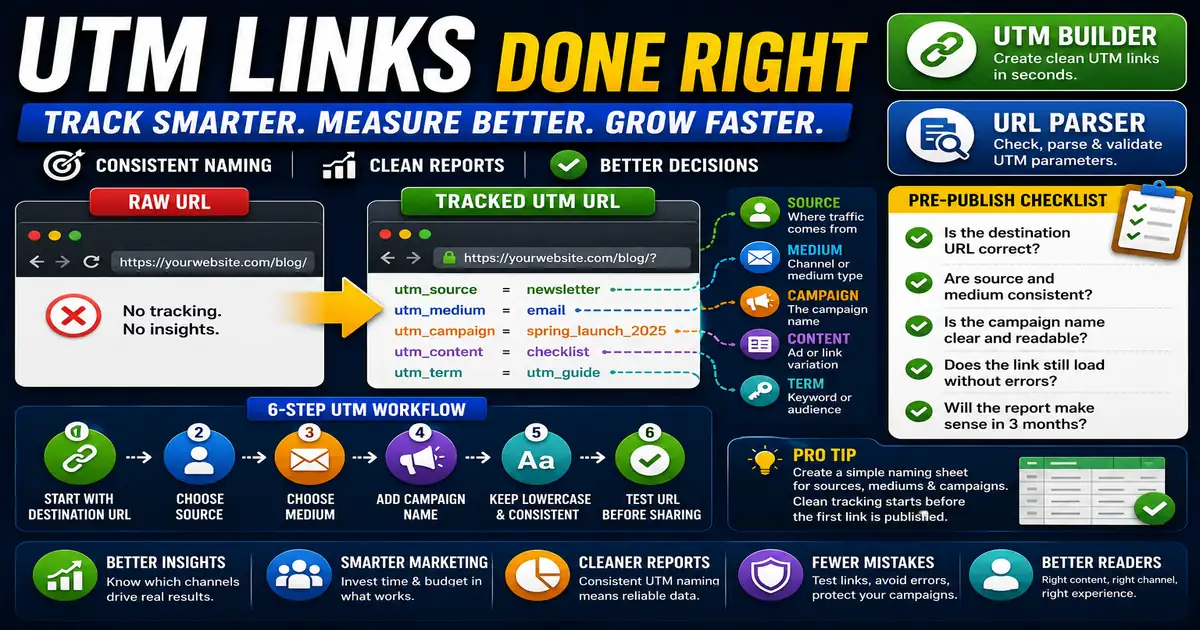
UTM links add tracking parameters to URLs so analytics tools can group traffic by campaign. For bloggers and marketers, they make promotion easier to measure. This matters for bloggers, newsletter owners, social media managers, and small marketing teams because small publishing decisions compound across a site over time.
The Core Idea
The core idea is simple: consistent UTM naming is more valuable than complex tracking because clean reports depend on predictable labels. When this idea is applied consistently, the page feels more intentional and the publishing process becomes less dependent on memory or guesswork.
Why It Matters in Practice
If you share a new blog post in a newsletter and on LinkedIn, UTM parameters can show which channel sent more engaged visitors.
This is where local tools are useful. They give you a fast way to check one detail without opening a large application or sending your content through an external service. For a focused hands-on check, use the UTM Builder and URL Parser while reviewing the page.
A Practical Step-by-Step Workflow
The most important habit is to define simple naming rules before links are shared.
- Start with the destination URL.
- Choose a clear campaign source such as newsletter or linkedin.
- Choose a medium such as email, social, or cpc.
- Add a campaign name that your team will recognize later.
- Keep naming lowercase and consistent.
- Test the final URL before publishing.
This workflow can be added to a publishing checklist, a content brief, or a personal editing routine. The exact order may change from one project to another, but the habit of checking before publishing is what protects quality over time.
Practical Example
A blogger launching a downloadable checklist can tag newsletter, social, and partner links differently. Later, the report shows which promotion actually brought engaged readers.
Common Mistakes to Avoid
When optimizing this element in your drafts, review the final output carefully to avoid errors that compromise readability and search presentation. Watch for these specific mistakes:
- Using different names for the same source.
- Adding spaces or unclear labels.
- Tagging internal site links with campaign parameters.
- Forgetting to document campaign names.
- Sharing links without testing redirects.
Pre-Publish Checklist
Review this focused checklist before publishing your work to ensure all details are correct:
- Specify source, medium, and campaign parameters correctly.
- Use lowercase letters for all UTM parameter values.
- Avoid spaces in campaign names; use hyphens instead.
- Verify redirect destinations preserve campaign query strings.
A Small Workflow Tip
Create a small naming sheet for campaigns before sharing links. It does not need to be complex. Record approved source names, medium names, and campaign naming patterns. This prevents newsletter, Newsletter, email, and Email from becoming separate report rows that mean the same thing. Clean tracking starts before the first link is published.
One more useful habit is to test the tracked URL in a private browser window before it is sent. That catches broken redirects, accidental spaces, and destination mistakes while there is still time to fix the campaign link.