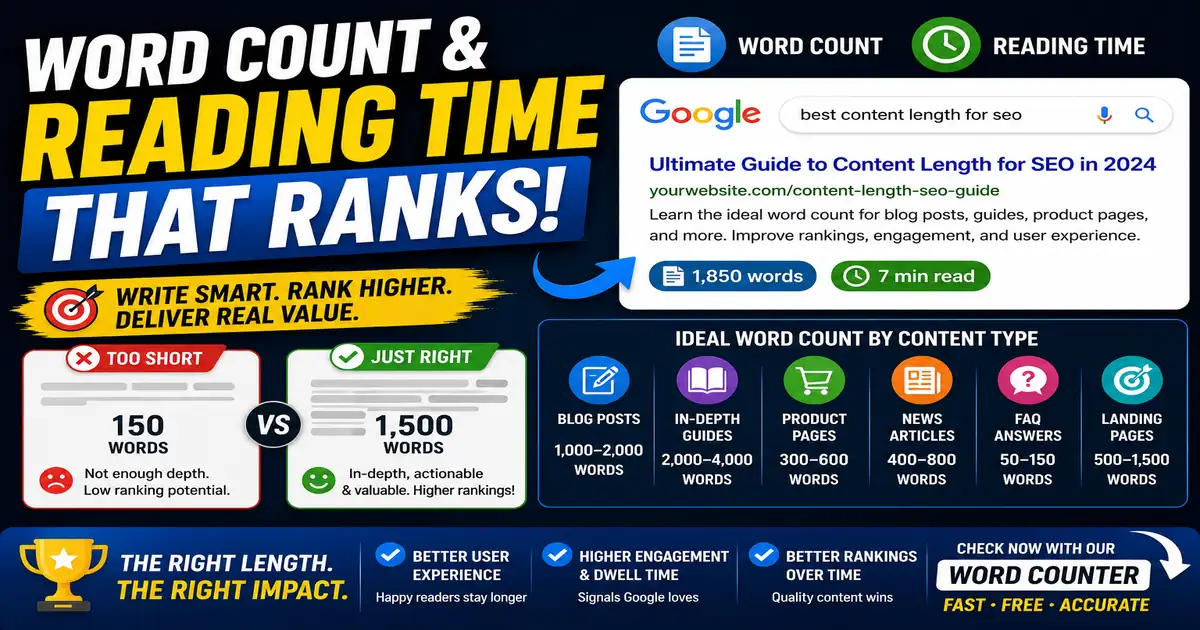
One of the most persistent myths in digital marketing is that every blog post must exceed a specific word count to rank on Google. While statistical studies show that longer articles often secure top search positions, word count itself is not a ranking factor. The real key to ranking is content depth—providing a complete and useful answer to the searcher's query.
Matching Content Length to Search Intent
The ideal length of your content depends entirely on what the user wants. If a user searches for "current time in Paris," they want a quick, one-word answer. Writing a 2,000-word history of time zones for that query will frustrate the reader and rank poorly. However, if they search for "how to build a website," they expect a detailed, step-by-step guide. In that case, a 300-word summary is insufficient.
The Risk of Writing Filler
Chasing word counts often leads writers to add "filler" sentences, repetitive paragraphs, and generic fluff. Google's helpful content system is specifically designed to detect and demote low-value content that repeats the same ideas in different words. Every paragraph you publish should provide new value, real examples, or useful context.
Best Practices for Content Planning
- Analyze competitor length: Search your target keyword and review the top three ranking pages. Note how detailed their guides are.
- Focus on comprehensive answers: Instead of asking "how many words did I write?", ask "have I answered every sub-question a reader might have?"
- Improve readability: Use bullet points, bold text, short paragraphs, and relevant subheadings to make longer posts easy to scan.
You can check your drafts' stats and estimate how long they will take to read by using the Word Counter and the Reading Time Calculator.