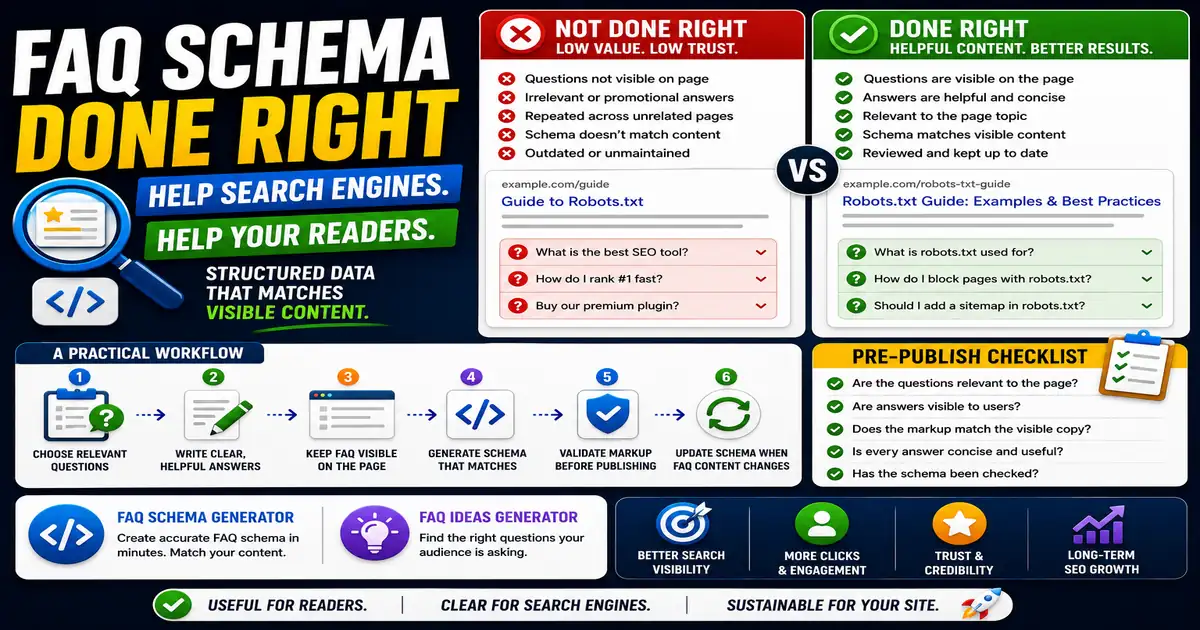
FAQ schema is structured data that describes question-and-answer content on a page. It does not replace useful writing, but it can help search engines understand the FAQ section more precisely. This matters for bloggers, local site owners, and SEO beginners adding structured data because small publishing decisions compound across a site over time.
The Core Idea
The core idea is simple: FAQ schema should match visible FAQ content and answer real questions users may have. When this idea is applied consistently, the page feels more intentional and the publishing process becomes less dependent on memory or guesswork.
Why It Matters in Practice
A guide about robots.txt can include questions about blocking pages, adding a sitemap line, and whether robots.txt protects private content. Those visible answers can be marked up with FAQ schema.
This is where local tools are useful. They give you a fast way to check one detail without opening a large application or sending your content through an external service. For a focused hands-on check, use the FAQ Schema Generator and FAQ Ideas Generator while reviewing the page.
A Practical Step-by-Step Workflow
The safest workflow is to write the FAQ for humans first, then generate structured data from the same content.
- Choose questions that support the page topic.
- Write direct answers in plain language.
- Keep the FAQ visible on the page.
- Make sure schema text matches visible text.
- Validate the generated markup before publishing.
- Update schema when FAQ content changes.
This workflow can be added to a publishing checklist, a content brief, or a personal editing routine. The exact order may change from one project to another, but the habit of checking before publishing is what protects quality over time.
Practical Example
A page about URL encoding should answer practical questions, not random SEO trivia. If the FAQ helps the reader decide when to encode or decode a URL, the schema has a real content purpose.
Common Mistakes to Avoid
When optimizing this element in your drafts, review the final output carefully to avoid errors that compromise readability and search presentation. Watch for these specific mistakes:
- Adding schema for questions that are not visible.
- Using promotional answers instead of helpful answers.
- Repeating the same FAQ across unrelated pages.
- Marking up content that does not belong to the page owner.
- Forgetting to update schema after editing answers.
Pre-Publish Checklist
Review this focused checklist before publishing your work to ensure all details are correct:
- Ensure the FAQ questions match real search queries.
- Write concise, helpful answers in standard HTML paragraphs.
- Generate and validate the JSON-LD schema markup code.
- Confirm the schema questions match the visible page text.
A Small Workflow Tip
Keep the FAQ source in one place when possible. If the visible FAQ is edited in the article but the schema is copied somewhere else, the two can drift apart. A good habit is to update the visible answer first, then regenerate or review the structured data immediately. Matching content is both safer and easier to maintain.